
Frozen Pipes: USDA State Freeze Risk, Thawing & Winter Protection
Uninsulated potable water pipes face acute ice expansion and splitting risk once ambient temperatures drop to <=20 °F (-6.7 °C) sustained. Cross-referencing USDA Plant Hardiness Zone data across 51 US jurisdictions highlights severe sub-20 °F exposure across 100% of ZIP codes in northern states while mild states like Florida and Hawaii sit near 0%. Closing exterior hose-bibb isolation stops, maintaining >=55 °F indoor cabinet heat, and using PEX-A F1960 expansion tubing (~3x freeze expansion tolerance) prevents costly bursts.
- Critical Burst Threshold
- <= 20 °F (-6.7 °C)
- Rigid Copper Split Risk
- Zero Ice Expansion
- PEX-A Freeze Tolerance
- ~3x Diameter Stretch
- Active Burst Action
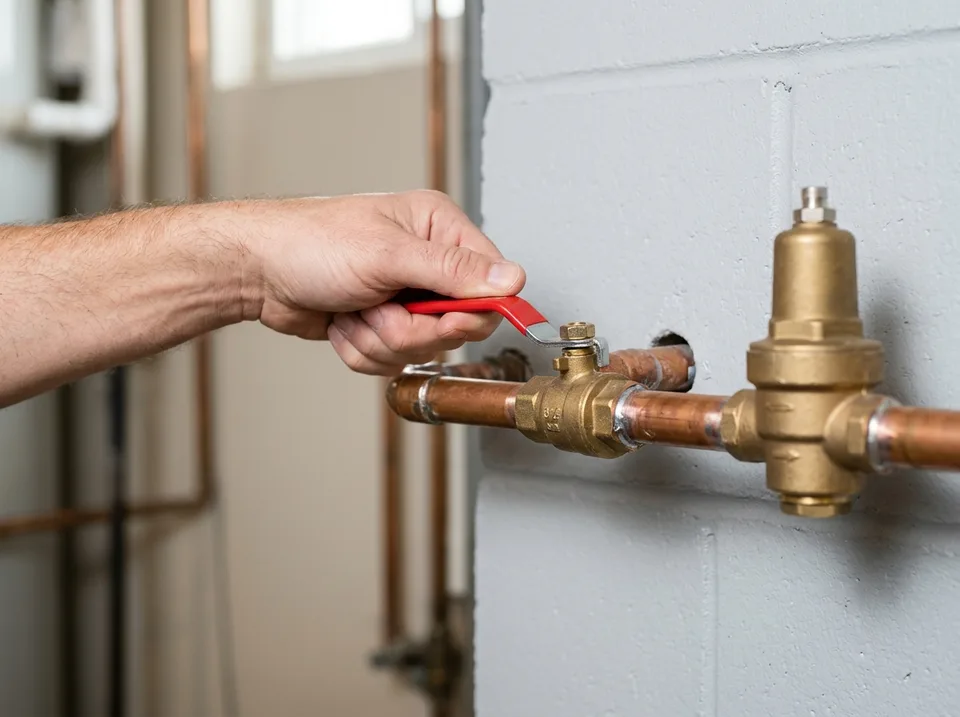
- Shut Main Ball Valve
Why pipes burst downstream of the ice plug: freezing water expands ~9%, compressing liquid trapped between the ice blockage and closed faucets past 2,000+ psi until copper or CPVC splits.
Never thaw with open flames: propane torches ignite dry framing joists and melt soldered joints—use hair dryers, heat lamps, or wet warm towels strictly from the open faucet backward toward the freeze.
How Do You Thaw a Frozen Water Pipe Safely Without Bursting It?
Open the downstream cold and hot faucets supplied by the frozen branch first so melting ice and steam have an escape path. Apply gentle heat with a hair dryer or UL-listed heat tape working strictly from the open faucet back toward the frozen wall section.
Which States Have the Highest Sub-20°F Pipe Freeze Exposure?
USDA PHZM 2023 ZIP-code extreme minimum temperature data reveals over 40 US jurisdictions experience <=20 °F freezes across large portions of their housing stock, requiring frost-free ASSE 1019 hose bibbs, closed-cell foam sleeves, and deep crawlspace winterization.
Which US States Carry the Highest USDA Sub-20°F Freeze-Burst Exposure?
Every threshold below is sourced from U.S. government datasets, published model code section citations, or OEM service documentation.
| State | Extreme Min Temp | USDA Zones | ZIPs <=20 °F | Adopted Code |
|---|---|---|---|---|
| Alaska (AK) | -60.0 °F | 1a to 8b | 100.0% | 2021 UPC |
| Minnesota (MN) | -40.0 °F | 3a to 5a | 100.0% | 2020/2026 MN Plumbing Code |
| Maine (ME) | -35.0 °F | 3b to 7a | 100.0% | 2021 UPC |
| Montana (MT) | -35.0 °F | 3b to 6b | 100.0% | 2021 UPC |
| North Dakota (ND) | -35.0 °F | 3b to 4b | 100.0% | 2021/2024 ND State Plumbing Code |
| Wisconsin (WI) | -35.0 °F | 3b to 6a | 100.0% | State Custom Code |
| Colorado (CO) | -30.0 °F | 4a to 7a | 100.0% | 2021 IPC (Colorado Plumbing Code) |
| Idaho (ID) | -30.0 °F | 4a to 7b | 100.0% | 2024 ISPC |
| Michigan (MI) | -30.0 °F | 4a to 7a | 100.0% | 2021 MPC |
| New Hampshire (NH) | -30.0 °F | 4a to 6b | 100.0% | 2021 IPC |
| New York (NY) | -30.0 °F | 4a to 7b | 100.0% | 2022 NYC Plumbing Code / 2020 NYS |
| South Dakota (SD) | -30.0 °F | 4a to 5b | 100.0% | 2015/2024 SD Plumbing Code |
| Utah (UT) | -30.0 °F | 4a to 8b | 100.0% | 2021 IPC |
| Vermont (VT) | -30.0 °F | 4a to 6b | 100.0% | 2021 VT Plumbing Rules |
| Wyoming (WY) | -30.0 °F | 4a to 5b | 100.0% | Local Municipal Adoption |
| Iowa (IA) | -25.0 °F | 4b to 6a | 100.0% | 2024 UPC |
| Illinois (IL) | -20.0 °F | 5a to 7a | 100.0% | State Custom Code |
| Nebraska (NE) | -20.0 °F | 5a to 6a | 100.0% | Local Municipal Adoption |
| New Mexico (NM) | -20.0 °F | 5a to 8b | 100.0% | 2021 NM Plumbing Code (UPC) |
| Indiana (IN) | -15.0 °F | 5b to 7a | 100.0% | 2012 IPC w/ IN Amendments |
| Massachusetts (MA) | -15.0 °F | 5b to 7b | 100.0% | State Custom Code |
| Missouri (MO) | -15.0 °F | 5b to 8a | 100.0% | Local Municipal Adoption |
Who Should Not Attempt DIY Pipe Thawing Without Main Valve Isolation?
Heating a frozen pipe whose copper or PVC wall has already split behind drywall immediately unleashes 8–12 GPM pressurized flooding.
Key Limitations & Exclusions
- Never use open propane torches, kerosene heaters, or charcoal grills inside crawlspaces or wall cavities.
- Know exact main quarter-turn shutoff valve location before applying heat—if ice already split the pipe, melting it triggers immediate flooding.
- Do not apply electrical welders to thaw pipes; stray current creates house fire and shock hazards.
Which Option Fits Your Situation?
What Do Homeowners Ask Most About This Topic?
Direct answers to common technical, regulatory, and sizing questions sourced from primary U.S. government and OEM documentation.
How much for a plumber for 3 hours?
Using May 2024 U.S. Bureau of Labor Statistics employee wage data ($29.98/hr national state median pay), 3 hours of employee base pay equal $90. Applying a typical 1.85x licensed contractor truck, insurance, and overhead multiplier puts estimated 3-hour billed labor near $166 before parts or permits.
How much does a plumber charge for 4 hours of work?
At the May 2024 U.S. Bureau of Labor Statistics national state median employee wage of $29.98/hr, 4 hours of base pay total $120. Modeling standard 1.85x licensed contractor overhead puts 4 hours of billed residential labor near $222, rising in high-wage states like Illinois, Massachusetts, California, and Washington.
Are 24 hour plumbers more expensive?
Yes. May 2024 U.S. Bureau of Labor Statistics wages measure straight-time employee pay rather than contractor dispatch rates; emergency nights, weekends, and holiday calls typically add after-hours dispatch fees and overtime labor multipliers on top of daytime service rates to cover on-call truck readiness.
What questions should I ask a plumber?
Confirm their active state plumbing license number (such as Texas TSBPE RMP or state board ID), verify general liability and workers' compensation certificates, ask whether municipal permits and inspection fees are itemized in writing, and confirm flat-rate versus hourly overtime billing before work starts.
How do I find a good plumber?
Verify active state licensing standing directly on your state plumbing board portal rather than relying solely on star-rating ads. Request 2 to 3 written itemized scopes specifying permit numbers, ASME/IPC material grades (such as Type L copper vs. F1960 PEX-A), and disposal of old equipment.
What is a temporary fix for a hole in a pipe?
First close the main quarter-turn shutoff valve perpendicular to the pipe and open the lowest cold tap to bleed 50–80 psi line pressure. For minor pinhole weeping until a licensed plumber replaces the damaged section, clamp an EPDM rubber sleeve with stainless steel hose clamps or install an ASME-rated push-fit coupling.
How much is plumbing service per hour?
Employee plumber wages reported by the May 2024 U.S. Bureau of Labor Statistics span roughly $20.00/hr to $49.00+/hr across 51 jurisdictions (national state median $29.98/hr). Billed residential service-call rates combine those employee wages with 1.75x–2.25x truck stock, licensing insurance, workers' comp, and dispatch overhead.
How long should 40 pounds of salt last in a water softener?
Under USGS household water usage of 75 gallons per person daily at 10 GPG hardness, a four-person home needs roughly 3,000 grains of daily capacity, or 21,000 grains per week. At typical 8–10 lb salt usage per weekly regeneration, one 40 lb bag lasts about 4 to 5 weeks.
Sources
- USDA Plant Hardiness Zone Map ZIP Code Extreme Minimum Temperatures — USDA ARS & Oregon State PRISM Climate Group, 2023 PHZM ZIP Table (retrieved 2026-11-23)
- NOAA National Weather Service Active Alerts API (Freeze Warnings) — NOAA National Weather Service, Live CAP GeoJSON Feed (retrieved 2026-11-23)
- International Plumbing Code (IPC) & International Fuel Gas Code (IFGC Table 402.4) — International Code Council (ICC), 2021 / 2024 IPC & IFGC (retrieved 2026-11-23)
- ASTM B88 Copper Water Tube & ASME B1.20.1 Pipe Threads — ASTM International & ASME, ASTM B88 / F876 / ASME B1.20.1 (retrieved 2026-11-23)