
Is Rotten Egg (Sulfur) Smell in Hot Water Normal?
Harmless to pipes short-term, but indicates sulfate-reducing bacteria (SRB) reacting with a Magnesium anode. If ONLY the hot water smells like sulfur/rotten eggs while cold water smells clean, non-toxic sulfate-reducing bacteria inside the tank are reacting with the standard magnesium anode rod to release hydrogen sulfide gas. If BOTH hot and cold smell, the source is the incoming well or water main.
- Diagnostic Verdict
- Harmless to pipes short-term, but indicates sulfate-reducing bacteria (SRB) reacting with a Magnesium anode
- Diagnostic Scope
- Hot Water Only vs. Both Hot & Cold
- Normal Threshold
- 0 mg/L hydrogen sulfide odor threshold; >0.5 ppm produces strong odor.
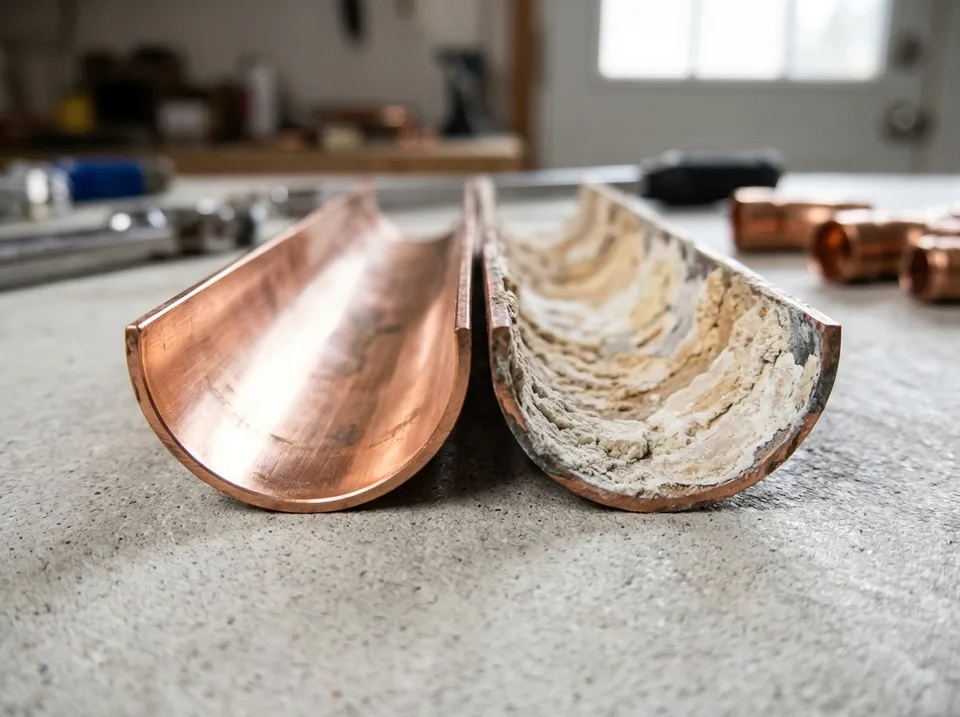
Isolation Check: Hot-Only vs. Both Hot & Cold
Separate fixture-specific issues from whole-home supply or water-heater symptoms using the 2 diagnostic branches below before replacing valves or appliances.
| Observation | Likely Root Cause | Recommended Next Step |
|---|---|---|
| Hot water taps only (cold smells clean) | Sulfate-reducing bacteria reacting with Magnesium anode rod | Swap to Aluminum-Zinc or Powered Titanium anode; sanitize tank |
| Both hot and cold taps smell | Dissolved hydrogen sulfide in well water or municipal supply | Test cold supply at hose bibb; evaluate catalytic carbon/aeration |
What Pressure and Water Chemistry Thresholds Apply?
Check measured household static water pressure, tap hardness GPG, and thermal operating cutoffs against the verified residential code and USGS engineering benchmarks below.
| Diagnostic Parameter | Verified Threshold / Value | Reference Basis |
|---|---|---|
| Hydrogen Sulfide Odor Threshold | > 0.5 ppm noticeable rotten-egg odor | USGS / Water Quality |
| Standard Anode Boss Thread | 3/4 in. NPT tapered (ASME B1.20.1) | ASME B1.20.1 |
| Anti-Scald Minimum Safe Temp | 120 °F residential setpoint (check Legionella guidance) | DOE / CPSC |
When Should You Escalate This Symptom to a Licensed Plumber?
For hot-only odor: replace the Magnesium anode rod with an Aluminum-Zinc or Powered Titanium anode and sanitize tank per OEM manual. Note: do NOT confuse sulfur odor with rotten-egg mercaptan gas leaks.
Verify the odor is not mercaptan natural gas/propane around the burner before troubleshooting plumbing—if gas odor persists outdoors/near meter, call 911 immediately.
What Are the Key Questions and Answers?
Direct answers to common technical, regulatory, and sizing questions sourced from primary U.S. government and OEM documentation.
Are the specifications on Is Rotten Egg (Sulfur) Smell in Hot Water Normal? sourced from public records?
Numbers cited in Is Rotten Egg (Sulfur) Smell in Hot Water Normal? originate from U.S. federal agencies, state licensing portals, or manufacturer specifications without invented scores. Verdict: Harmless to pipes short-term, but indicates sulfate-reducing bacteria (SRB) reacting with a Magnesium anode. Baseline: 0 mg/L hydrogen sulfide odor threshold; >0.5 ppm produces strong odor..
Which conditions override general reference data for Is Rotten Egg (Sulfur) Smell in Hot Water Normal??
Always confirm city-level code amendments and call 911 outdoors for gas odors before performing work related to Is Rotten Egg (Sulfur) Smell in Hot Water Normal?. For hot-only odor: replace the Magnesium anode rod with an Aluminum-Zinc or Powered Titanium anode and sanitize tank per OEM manual. Note: do NOT confuse sulfur odor with rotten-egg mercaptan gas leaks.
What national code ceilings govern Is Rotten Egg (Sulfur) Smell in Hot Water Normal??
Homeowners must balance municipal IPC/UPC amendments (80 psi PRV limits, backflow testing) alongside EPA water caps and 2029 DOE heater rules.
Are DOE HEAR rebates still available after 25C expired?
Because P.L. 119-21 terminated 25C on Dec 31, 2025, 2026 incentives come through state DOE HEAR portals (<=150% AMI) and electric or water district rebates.
When should a homeowner escalate Is Rotten Egg (Sulfur) Smell in Hot Water Normal? to a state-licensed plumber?
Escalate whenever tasks involve fuel-gas piping, Category IV exhaust venting, 240V electrical circuits, main shutoff valves, or permitted sewer excavations.
Does TapAndPipe accept paid placements inside Is Rotten Egg (Sulfur) Smell in Hot Water Normal??
No. All specifications, state benchmarks, and contractor lists derive strictly from official public records and OEM manuals with zero paid ranking boosts.
Sources
- National Water Quality Monitoring Council Water Quality Portal (Hardness, Ca, Mg) — USGS & U.S. EPA, WQP Result Service (retrieved 2026-11-23)
- A. O. Smith Residential Water Heater Serial Number & Diagnostics Documentation — A. O. Smith Corporation, OEM Technical Bulletins (retrieved 2026-11-23)
- Bradford White ICON System Diagnostic Blink Codes & Date Code Guide — Bradford White Corporation, ICON Gas Control Service Manual (retrieved 2026-11-23)
- International Plumbing Code (IPC) & International Fuel Gas Code (IFGC Table 402.4) — International Code Council (ICC), 2021 / 2024 IPC & IFGC (retrieved 2026-11-23)
- USGS Water Science School — Drip & Household Leak Volume Conversion (15,140 drops/gal) — U.S. Geological Survey, USGS Drip Calculator Method (retrieved 2026-11-23)