
EPA Lead and Copper Rule Improvements (LCRI) & Service Line Inventories
The EPA Lead and Copper Rule Improvements (LCRI) lowers the federal Lead Action Level from 15 ppb to 10 ppb and requires most community water systems to identify and replace lead and galvanized-requiring-replacement (GRR) service lines within 10 years, building on initial October 2024 Service Line Inventories. Effective 2024-10-08 (10-year replacement mandate) under Federal SDWA (Public Water Systems) enforcement across verified agency rules and municipal code cycles.
- Effective / Compliance Date
- 2024-10-08 (10-year replacement mandate)
- Jurisdiction
- Federal SDWA (Public Water Systems)
- Tracked Metrics
- 3 Verified Rules
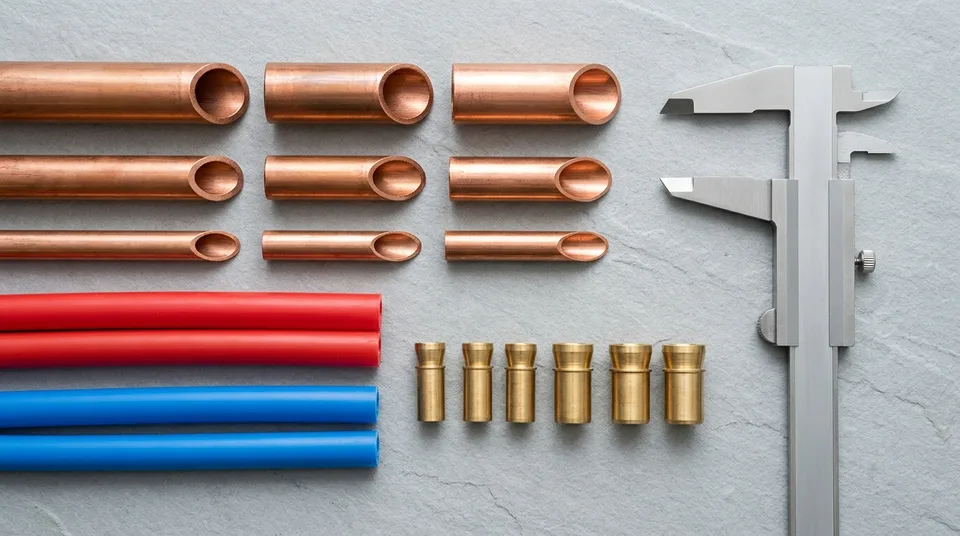
Lowering the federal Lead Action Level from 15 ppb to 10 ppb under LCRI triggers system-wide corrosion control evaluations and accelerated replacement of lead and galvanized-requiring-replacement (GRR) service lines.
What Are the Verified Statutory and Technical Benchmarks?
Review all 3 official federal and state compliance thresholds effective 2024-10-08 (10-year replacement mandate) across Federal SDWA (Public Water Systems), attributed directly to primary agency releases.
| Provision / Threshold | Official Value / Status |
|---|---|
| Revised Lead Action Level | 10 ug/L (ppb), down from 15 ppb |
| Copper Action Level | 1.3 mg/L (1,300 ppb) |
| Pre-1986 solder ban | Safe Drinking Water Act Lead Ban (1986) |
What Are the Key Questions and Answers?
Direct answers to common technical, regulatory, and sizing questions sourced from primary U.S. government and OEM documentation.
Which official agencies and manuals back EPA Lead and Copper Rule Improvements?
All figures for EPA Lead and Copper Rule Improvements trace directly to public federal datasets, model IPC/UPC codes, and published manufacturer sheets. Effective date: 2024-10-08 (10-year replacement mandate); jurisdiction: Federal SDWA (Public Water Systems).
When does EPA Lead and Copper Rule Improvements require an on-site licensed inspection?
General benchmarks never replace municipal building rules or licensed diagnostics on pressurized fuel gas, sealed burners, or electrical panels. Confirm local state energy office or municipal water authority announcements before submitting rebates or permit applications.
Which 2026–2029 federal and IPC/UPC limits affect EPA Lead and Copper Rule Improvements?
Residential compliance spans IPC/UPC trap-arm and pressure caps (<=80 psi), NFPA 54 / IFGC fuel gas capacities, EPA 10 ppb LCRI lead rules, and 2029 DOE UEF standards.
What replaced the $2,000 federal 25C credit in 2026?
IRC Section 25C expired December 31, 2025 under OBBBA; state-administered DOE HEAR grants (up to $1,750 income-qualified) and municipal utility rebates remain.
When should a homeowner escalate EPA Lead and Copper Rule Improvements to a state-licensed plumber?
Escalate whenever tasks involve fuel-gas piping, Category IV exhaust venting, 240V electrical circuits, main shutoff valves, or permitted sewer excavations.
Does TapAndPipe accept paid placements inside EPA Lead and Copper Rule Improvements?
No. All specifications, state benchmarks, and contractor lists derive strictly from official public records and OEM manuals with zero paid ranking boosts.
Sources
- Lead and Copper Rule Improvements (LCRI) & Service Line Inventories — U.S. Environmental Protection Agency, 40 CFR Part 141 Subpart I (retrieved 2026-11-23)
- EPA ECHO Safe Drinking Water Act (SDWA) Public Water Systems Download — U.S. Environmental Protection Agency, SDWA System Search Extract (retrieved 2026-11-23)
- EIA Electric Power Monthly Table 5.6.A — Average Residential Electricity Price by State — U.S. Energy Information Administration (EIA), August 2026 Monthly Release (retrieved 2026-11-23)