
Water Heater Tank Leaking From Base or Jacket
Distinguish an overhead fitting or T&P weep (repairable) from rusted internal tank failure beneath the steel jacket seam while stopping 40–80 gallons of continuous feed water. Follow all three isolation steps in sequence during the 0–15 minute containment window before calling a state-licensed plumber. Every figure is checked against official U.S. government records, model energy code tables, or manufacturer service manuals with no fake reviews or paid rankings.
- Urgency Tier
- 0-15 Minutes Isolation & Tank Drain
- Gas 911 Gate
- Water / Power Isolation
- Target Response
- 0–15 Minutes
- Static Pressure Cap
- ≤ 80 psi (IPC §604.8)
How Do You Isolate Water Heater Tank Leaking From Base or Jacket in 3 Immediate Steps?
Execute this 0–15 minute containment sequence in strict order to halt active water discharge, eliminate electrical shock or ignition risks, and document conditions before licensed repair arrives.
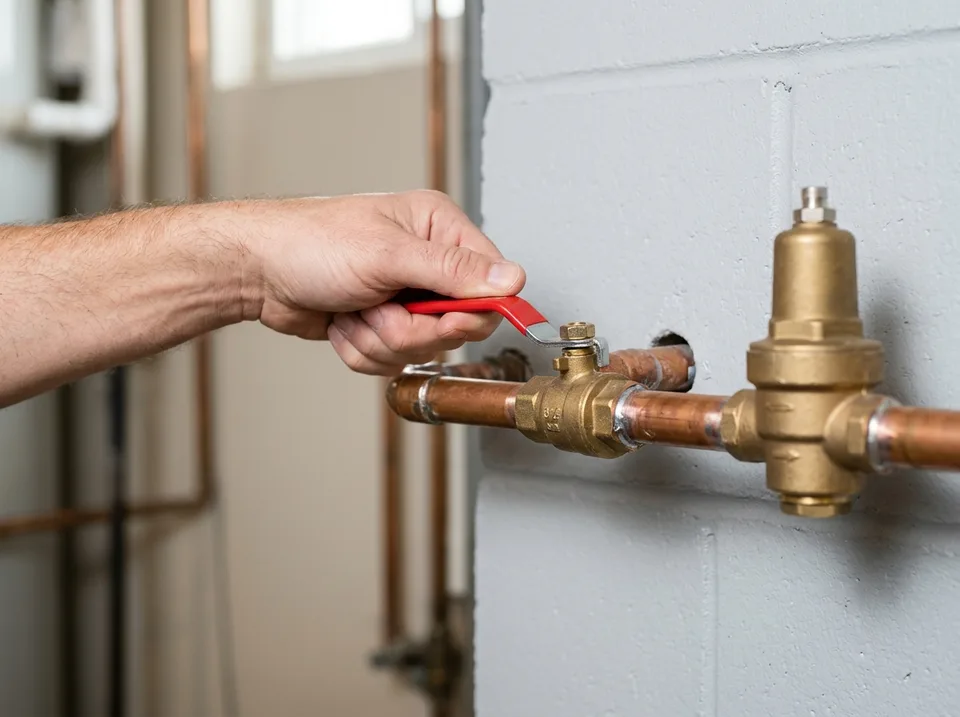
Turn off the cold-water inlet shutoff valve directly above the tank (clockwise or quarter-turn perpendicular) to stop refilling the ruptured vessel.
Shut off energy source: turn gas control knob to OFF (and close gas cock) for gas units, or switch OFF the dedicated 240V double-pole breaker for electric/HPWH tanks.
Check whether water comes from overhead fittings/T&P pipe (repairable) versus beneath the steel jacket seam (internal glass-lined tank failure requiring replacement). Attach garden hose to drain valve if safe.
What Are the Verified Safety and Code Thresholds?
Review physical pressure, thermal relief, and residential code limits governing Water Heater Tank Leaking From Base or Jacket, sourced from IPC, NFPA 54, and USDA freeze benchmarks.
| Parameter | Verified Standard |
|---|---|
| Pre-2029 gas 40-gal minimum UEF | 0.58 UEF (Medium draw, 10 CFR 430.32(d)(1)) |
| Post-May 6, 2029 electric 50-gal UEF | 2.30 UEF heat-pump threshold (10 CFR 430.32(d)(2)) |
| Standard tank anode boss thread | 3/4 in. NPT tapered boss (ASME B1.20.1) |
| Static Residential Supply Limit | 80 psi max (IPC §604.8 PRV ceiling) |
| T&P Relief Valve Calibration | 150 psi / 210 deg F automatic discharge |
Which Other Emergency Isolation Playbooks Apply?
Switch to any adjacent emergency playbook below if multiple fixtures, fuel odors, or drain backups occur simultaneously across your home.
| Scenario | Urgency | First Shutoff Action |
|---|---|---|
| Burst or Frozen Water Pipe Shutoff & Triage | 0-15 Minutes Critical Water Shutoff | Close the main house shutoff valve perpendicular to the pipe |
| Natural Gas or Propane Smell Near Water Heater | IMMEDIATE EVACUATION — CALL 911 & GAS UTILITY | Evacuate immediately without operating switches and call 911 outside |
| Main Sewer Line Backup (Lowest Drain Overflowing) | Stop All Water Use & Isolate Cleanout | Halt all toilets, washers, and sinks; inspect exterior cleanout |
| Water Heater T&P Relief Valve Discharging Hot Water | Thermal Expansion vs. Over-Temp Check | Never cap the T&P pipe; lower thermostat to 120 °F and check expansion tank |
| Basement Sump Pump Stuck or Overflowing | Electrical GFCI Check & Discharge Line Clearing | Check GFCI/breaker safely without stepping in standing water |
What Are the Key Questions and Answers?
Direct answers to common technical, regulatory, and sizing questions sourced from primary U.S. government and OEM documentation.
What is the first shutoff step for Water Heater Tank Leaking From Base or Jacket?
Turn off the cold-water inlet shutoff valve directly above the tank (clockwise or quarter-turn perpendicular) to stop refilling the ruptured vessel. Next: Shut off energy source: turn gas control knob to OFF (and close gas cock) for gas units, or switch OFF the dedicated 240V double-pole breaker for electric/HPWH tanks.
What verification step finishes Water Heater Tank Leaking From Base or Jacket isolation?
Check whether water comes from overhead fittings/T&P pipe (repairable) versus beneath the steel jacket seam (internal glass-lined tank failure requiring replacement). Attach garden hose to drain valve if safe. Standard residential thresholds remain <= 80 psi supply pressure (IPC §604.8) and 150 psi / 210 °F relief limits.
When does Water Heater Tank Leaking From Base or Jacket require calling 911 vs. a licensed plumber?
Call 911 immediately from outdoors whenever natural gas or propane odor, carbon monoxide alarm, or electrical arcing occurs; otherwise isolate main valves and book a state-licensed contractor.
Are the specifications on Water Heater Tank Leaking From Base or Jacket sourced from public records?
Numbers cited in Water Heater Tank Leaking From Base or Jacket originate from U.S. federal agencies, state licensing portals, or manufacturer specifications without invented scores. Urgency tier: 0-15 Minutes Isolation & Tank Drain.
Which conditions override general reference data for Water Heater Tank Leaking From Base or Jacket?
Always confirm city-level code amendments and call 911 outdoors for gas odors before performing work related to Water Heater Tank Leaking From Base or Jacket. Always call 911 from outside upon detecting gas odors and kill electrical breakers before standing in water.
What national code ceilings govern Water Heater Tank Leaking From Base or Jacket?
Homeowners must balance municipal IPC/UPC amendments (80 psi PRV limits, backflow testing) alongside EPA water caps and 2029 DOE heater rules.
Are DOE HEAR rebates still available after 25C expired?
Because P.L. 119-21 terminated 25C on Dec 31, 2025, 2026 incentives come through state DOE HEAR portals (<=150% AMI) and electric or water district rebates.
When should a homeowner escalate Water Heater Tank Leaking From Base or Jacket to a state-licensed plumber?
Escalate whenever tasks involve fuel-gas piping, Category IV exhaust venting, 240V electrical circuits, main shutoff valves, or permitted sewer excavations.
Sources
- 10 CFR 430.32 — Energy and Water Conservation Standards (Water Heaters & Plumbing Fixtures) — U.S. Department of Energy / eCFR, 2026 eCFR (incl. May 6, 2029 Rule) (retrieved 2026-11-23)
- ASTM B88 Copper Water Tube & ASME B1.20.1 Pipe Threads — ASTM International & ASME, ASTM B88 / F876 / ASME B1.20.1 (retrieved 2026-11-23)
- International Plumbing Code (IPC) & International Fuel Gas Code (IFGC Table 402.4) — International Code Council (ICC), 2021 / 2024 IPC & IFGC (retrieved 2026-11-23)