
Why Does My Toilet Keep Running? Diagnostics & WaterSense Specs
A continuously running toilet almost always traces to a warped rubber flapper seal, tangled flush chain, or fill-valve float adjusted above the overflow standpipe. Per USGS drip calibrations (15,140 drops per gallon), even a slow invisible leak wastes thousands of gallons annually, whereas upgrading pre-1994 3.5+ GPF toilets to any of 6,087 EPA WaterSense certified <=1.28 GPF models cuts flush volume well below the 1.6 GPF federal 10 CFR 430.32 ceiling.
- WaterSense Toilet Cap
- <= 1.28 GPF
- Federal 10 CFR 430 Cap
- 1.6 GPF Max
- USGS Leak Calibration
- 15,140 drops/gal
- Overflow Margin
- 1/2 in. Below Rim
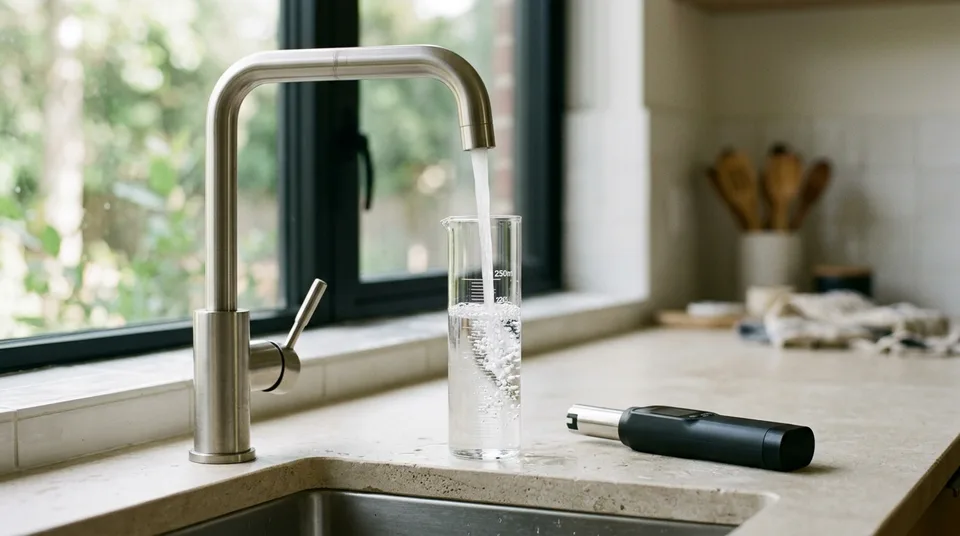
Food-coloring dye test: drop 5–10 drops of dark dye into the upper tank without flushing; if color appears inside the bowl within 15 minutes, the flapper or flush-valve gasket is leaking.
Chemical bleach tablet warning: in-tank chlorine pucks swell silicone/EPDM flappers and void OEM Kohler/TOTO flush valve warranties.
How Do You Fix a Running Toilet in Under 15 Minutes?
Remove the porcelain tank lid and observe whether water pours continuously over the central plastic overflow tube (fill-valve float too high or debris under fill diaphragm) or silently slips past a blistered flapper at the bottom of the tank.
When Should You Replace an Older Toilet With an EPA WaterSense Model?
Pre-1994 3.5–5.0 GPF toilets consume nearly triple the water per flush of <=1.28 GPF EPA WaterSense tank toilets. Many municipal utilities also offer rebates on WaterSense replacements—check local water district portals before discarding cracked tanks.
When Does a Running Toilet Signal a Cracked Overflow or Floor Leak?
Simple flapper swaps fail when the rigid plastic flush-valve seat is cracked or tank-to-bowl sponge gaskets weep onto bathroom subfloors.
Key Limitations & Exclusions
- Never drop chlorine bleach tablets directly into toilet tanks—chlorine degrades rubber flappers and plastic flush seals.
- Do not overtighten porcelain tank-to-bowl brass bolts unevenly, which cracks vitreous china tanks.
- If the wall angle-stop valve drips when turned clockwise, avoid forcing corroded stems and verify main shutoff location.
Which Option Fits Your Situation?
What Do Homeowners Ask Most About This Topic?
Direct answers to common technical, regulatory, and sizing questions sourced from primary U.S. government and OEM documentation.
Why does my toilet keep running?
A continuously running toilet almost always stems from a warped rubber flapper seal, a misaligned flush chain, or a fill-valve float set above the overflow tube rim. Because a 1-drop-per-second leak wastes 2,082+ gallons/year (15,140 drops/gal USGS), replacing the flapper or fill valve resolves most leaks.
How long should 40 pounds of salt last in a water softener?
Under USGS household water usage of 75 gallons per person daily at 10 GPG hardness, a four-person home needs roughly 3,000 grains of daily capacity, or 21,000 grains per week. At typical 8–10 lb salt usage per weekly regeneration, one 40 lb bag lasts about 4 to 5 weeks.
How big of a water softener do I need for a 3 bathroom house?
Size ion-exchange tanks by household occupants and measured USGS tap hardness rather than bathroom count alone. Multiply occupants by 75 gal/day and compensated hardness in GPG plus 4x clear-water iron ppm over a 7-day cycle; 3–4 residents at 10 GPG typically size into a 32,000-to-40,000-grain tank.
Can bacteria grow in a water softener brine tank?
High-salinity sodium chloride brine inhibits most microbial growth, though sediment, iron fouling, or stagnant water above the salt bridge can foster biofilm on tank walls. Cleaning the brine tank annually with mild non-chlorinated detergent or manufacturer-approved resin cleaner keeps the draw assembly sanitary.
Which state has the worst hard water?
Among states sampled in the USGS Water Quality Portal, California recorded 36.1 GPG median hardness across 4 high-mineral sampling sets, Ohio measured 15.6 GPG across 1,500 samples, Arizona measured 13.0 GPG across 173 samples, and Minnesota measured 12.5 GPG across 1,486 samples—all exceeding the 10.5 GPG Very Hard threshold.
Is hard water healthier for you?
Calcium and magnesium hardness ions above 7.0 GPG pose no federal health violation under EPA Safe Drinking Water Act rules, unlike 4.0 ppt PFAS or 10 ppb lead action levels. However, mineral scale coats tankless heat exchangers and tank heating elements, reducing thermal efficiency and shortening equipment service life.
Can I use 30% vinegar to flush my tankless water heater?
Standard OEM descaling manuals from Rinnai and Navien specify circulating 4 gallons of household 5% food-grade white vinegar or an NSF-approved descaling solution for 30 to 45 minutes. Undiluted 30% concentrated acetic acid can swell elastomeric O-rings and etch brass isolation valve components unless specifically diluted first.
How often should a tankless water heater be cleaned?
OEM manufacturers recommend flushing condensing and non-condensing tankless heat exchangers every 12 months when tap water reaches or exceeds 7.0 GPG USGS Hard classification, and every 6 months in Very Hard water above 10.5 GPG, alongside cleaning the cold-water inlet filter mesh screen.
Sources
- EPA WaterSense Labeled Plumbing Products Registry — U.S. Environmental Protection Agency, 2026 Certified Product Database (retrieved 2026-11-23)
- 10 CFR 430.32 — Energy and Water Conservation Standards (Water Heaters & Plumbing Fixtures) — U.S. Department of Energy / eCFR, 2026 eCFR (incl. May 6, 2029 Rule) (retrieved 2026-11-23)
- USGS Water Science School — Drip & Household Leak Volume Conversion (15,140 drops/gal) — U.S. Geological Survey, USGS Drip Calculator Method (retrieved 2026-11-23)