
Sump Pump Sizing, Vertical Head Loss & Battery Backup Guide
Size residential basement sump pumps by total dynamic head—vertical lift plus horizontal pipe friction—and local USDA SSURGO water table depth rather than horsepower stickers alone. A 1/3 HP to 1/2 HP cast-iron submersible pump with a silent check valve and DC marine battery backup protects basements where shallow water tables (<4 ft) or FEMA riverine flood risk surge during storms.
- Typical Residential Size
- 1/3 HP to 1/2 HP
- Standard Discharge Pipe
- 1-1/2 in. Sch 40 PVC
- Shallow Water Table Flag
- < 4 ft Depth (SSURGO)
- Winter Freeze Risk
- <= 20 °F Exterior Elbow
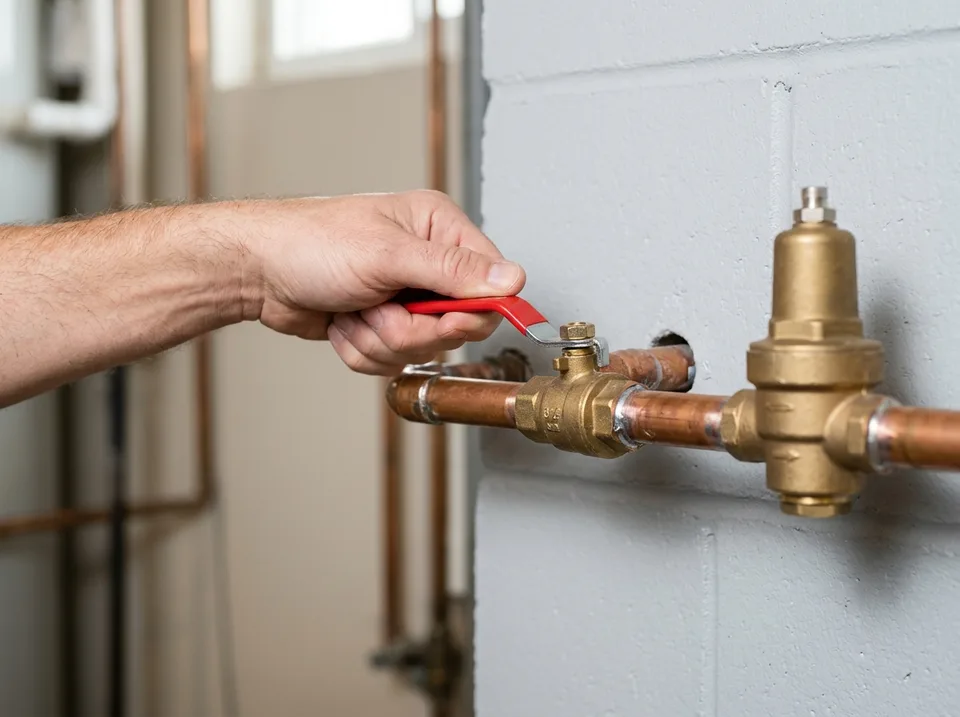
Why 10 ft head matters: a pump rated 3,000 GPH at 0 ft lift often drops to 1,800–2,100 GPH once pushing water up 10 vertical feet through two 90-degree elbows.
Freeze-line protection: exterior sump discharge lines running flat above ground freeze solid below 20 °F—slope piping away from foundations with an ice-relief freeze guard.
How Do You Match Sump Pump Horsepower and Check Valves to Head Height?
Measure vertical distance from the sump pit floor to the exterior grade exit, add 1 ft of equivalent head per 10 ft of horizontal 1-1/2 in. PVC pipe, and select a pump curve delivering at least 2,000 GPH at that total head with a vertical spring-loaded silent check valve.
When Is a DC Battery Backup or Water-Powered Backup Mandatory?
Severe storms knock out grid power precisely when groundwater peaks. Homes in FEMA high-flood counties or shallow SSURGO water tables (<4 ft) should pair a primary AC cast-iron pump with a 12V deep-cycle AGM battery backup or municipal-pressure backup ejector.
Who Should Not Rely on a Single AC Sump Pump Without Backup?
Basement bedrooms, finished drywall, and floor-level furnaces face rapid flood losses during summer thunderstorm outages.
Key Limitations & Exclusions
- Never connect a residential sump pump discharge into a municipal sanitary sewer lateral where prohibited by local IPC/city codes.
- Never use a vertical float switch inside a narrow <14 in. diameter pit where pump vibration pins the float.
- Check CPSC recall feeds before installing legacy pedestal or plastic-housing pumps.
Which Option Fits Your Situation?
What Do Homeowners Ask Most About This Topic?
Direct answers to common technical, regulatory, and sizing questions sourced from primary U.S. government and OEM documentation.
How much for a plumber for 3 hours?
Using May 2024 U.S. Bureau of Labor Statistics employee wage data ($29.98/hr national state median pay), 3 hours of employee base pay equal $90. Applying a typical 1.85x licensed contractor truck, insurance, and overhead multiplier puts estimated 3-hour billed labor near $166 before parts or permits.
How much does a plumber charge for 4 hours of work?
At the May 2024 U.S. Bureau of Labor Statistics national state median employee wage of $29.98/hr, 4 hours of base pay total $120. Modeling standard 1.85x licensed contractor overhead puts 4 hours of billed residential labor near $222, rising in high-wage states like Illinois, Massachusetts, California, and Washington.
Are 24 hour plumbers more expensive?
Yes. May 2024 U.S. Bureau of Labor Statistics wages measure straight-time employee pay rather than contractor dispatch rates; emergency nights, weekends, and holiday calls typically add after-hours dispatch fees and overtime labor multipliers on top of daytime service rates to cover on-call truck readiness.
What questions should I ask a plumber?
Confirm their active state plumbing license number (such as Texas TSBPE RMP or state board ID), verify general liability and workers' compensation certificates, ask whether municipal permits and inspection fees are itemized in writing, and confirm flat-rate versus hourly overtime billing before work starts.
How do I find a good plumber?
Verify active state licensing standing directly on your state plumbing board portal rather than relying solely on star-rating ads. Request 2 to 3 written itemized scopes specifying permit numbers, ASME/IPC material grades (such as Type L copper vs. F1960 PEX-A), and disposal of old equipment.
What is a temporary fix for a hole in a pipe?
First close the main quarter-turn shutoff valve perpendicular to the pipe and open the lowest cold tap to bleed 50–80 psi line pressure. For minor pinhole weeping until a licensed plumber replaces the damaged section, clamp an EPDM rubber sleeve with stainless steel hose clamps or install an ASME-rated push-fit coupling.
How much is plumbing service per hour?
Employee plumber wages reported by the May 2024 U.S. Bureau of Labor Statistics span roughly $20.00/hr to $49.00+/hr across 51 jurisdictions (national state median $29.98/hr). Billed residential service-call rates combine those employee wages with 1.75x–2.25x truck stock, licensing insurance, workers' comp, and dispatch overhead.
How long should 40 pounds of salt last in a water softener?
Under USGS household water usage of 75 gallons per person daily at 10 GPG hardness, a four-person home needs roughly 3,000 grains of daily capacity, or 21,000 grains per week. At typical 8–10 lb salt usage per weekly regeneration, one 40 lb bag lasts about 4 to 5 weeks.
Sources
- USDA NRCS SSURGO Soil Survey Water Table Depth & Drainage Characteristics — USDA Natural Resources Conservation Service, SSURGO County Soil Mart (retrieved 2026-11-25)
- FEMA National Risk Index (NRI) County Hazard & Winter Weather Release — Federal Emergency Management Agency (FEMA), National Risk Index County Release (retrieved 2026-11-25)
- USDA Plant Hardiness Zone Map ZIP Code Extreme Minimum Temperatures — USDA ARS & Oregon State PRISM Climate Group, 2023 PHZM ZIP Table (retrieved 2026-11-23)
- CPSC SaferProducts.gov Product Recalls REST API — U.S. Consumer Product Safety Commission, 2026 Live Recalls Feed (retrieved 2026-11-23)
- International Plumbing Code (IPC) & International Fuel Gas Code (IFGC Table 402.4) — International Code Council (ICC), 2021 / 2024 IPC & IFGC (retrieved 2026-11-23)